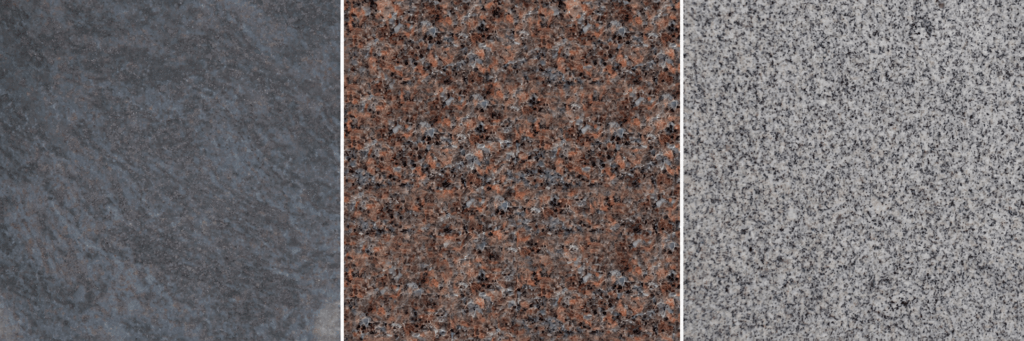
Choosing a granite memorial is a deeply personal decision. A particular color may feel comforting, a flowing mineral pattern may catch your eye, or a polished surface may offer the timeless appearance you envision. Understanding how these qualities work together helps turn that first impression into a thoughtful, lasting design.
Natural stone brings individuality to every memorial. Learning a little about its color, texture, and response to engraving can make the selection process more meaningful and help you choose with confidence.
Color and Pattern Give Stone Its Personality
Granite’s visible mineral crystals create its grain. Fine-grained varieties have small crystals that give the stone a subtle, more uniform appearance. Coarse-grained varieties have larger crystals, creating a bolder, more varied pattern. Some granites also display flowing mineral bands, often described as veining.
Grain size affects both the stone’s appearance and how lettering stands out. A quieter pattern can complement intricate details, while larger crystals may pair well with simpler designs and stronger lettering.
A sample shows the granite’s general character, but a full memorial reveals more of its pattern. Considering color and grain together helps you choose a stone that supports your design.
Finish Shapes How We See Granite
Surface finish influences how granite’s color and pattern appear. Polishing brings out depth and creates a reflective surface. A frosted finish offers a softer, matte appearance, while rock-pitched edges introduce a rugged texture.
These finishes can be combined to highlight different parts of a memorial. A polished face may showcase the stone’s color, while a textured border adds definition.
Lighting also affects what you see. The same polished surface may look different in a showroom, beneath an overcast sky, or in direct sunlight. Viewing physical examples and discussing the intended finish helps connect the appearance you admire with the setting where the memorial will stand.
Lettering Works with the Material
An inscription becomes part of the stone through craftsmanship. Its appearance depends on the granite’s color and grain, the lettering style, and the engraving technique.
Dark polished granite can provide strong contrast for certain etched designs. Lighter or more patterned granite may benefit from deeply carved lettering, a frosted panel, or another treatment selected for clarity.
This is where material and design come together. A lettering style that looks striking on one granite may create a gentler effect on another. Looking at completed examples in similar stone helps you understand those differences and identify the appearance you prefer.
A Conversation That Brings the Design Together
Helpful questions include: How much variation does this granite typically show? What will the selected finish look like? Which lettering treatment will make the inscription easiest to read?
Photographs and drawings are useful starting points. Physical samples and finished memorials add another layer of understanding, helping you appreciate the relationship between the material and the design.
At OM Stone, we help families explore these details with care. Understanding the stone’s natural character creates space for informed choices and a memorial that feels personal, balanced, and thoughtfully crafted.