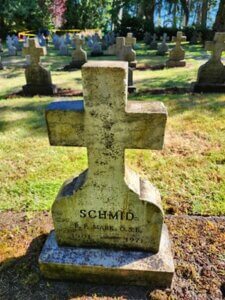
Historic Cemeteries: Where Stories, Stone, and Legacy Endure
Historic cemeteries in Oregon offer more than a glimpse into the past—they reveal how lives are remembered long after they are gone. Across the state, from quiet hillside burial grounds to prominent city cemeteries, each monument tells a story of identity, legacy, and connection. These places invite us not only to look back at history, but to consider what we leave behind for those who follow.
In Southern Oregon, Hillcrest Memorial Park in Grants Pass sits quietly on a hillside overlooking the valley. Among its notable burials is Carl Barks, the legendary illustrator behind Donald Duck and the creator of Scrooge McDuck, whose storytelling shaped generations of animation and comics. Also laid to rest here is actor Kevin Hagen, best known for his role as Doc Baker on Little House on the Prairie. Their presence reflects how Oregon cemeteries connect local ground to global cultural history.
Further north in Yamhill County, Hopewell Cemetery in Dayton dates back to the 1840s. Some of its earliest graves are marked simply with fieldstones, a reminder of frontier hardship and early settlement life. It is also the burial place of Johnnie Ray, the influential 1950s singer whose emotional style produced hits like ‘Cry’ and ‘Just Walking in the Rain,’ bridging the gap between traditional pop and the emerging rock era.
In the heart of Portland, Lone Fir Cemetery—once known as Mt. Crawford Cemetery—has been in use since 1846. As Portland grew, other small burial grounds along the Willamette River were relocated here due to flooding. Today, its 30 acres function as both cemetery and arboretum, with mature trees and ornate Victorian-era monuments reflecting changing funerary styles over time. The cemetery has become a final resting place for many of Portland’s founders, politicians, and historic figures.
Portland is also home to Riverview Cemetery, established in 1882 along the scenic west bank of the Willamette River. It is the final resting place of many influential figures including publisher Henry Pittock, brewer Henry Weinhard, civic leader Henry Corbett, pioneer James Terwilliger, philanthropist Albertina Kerr, and lawman Virgil Earp. Each monument tells part of Oregon’s civic and entrepreneurial history.
In nearby Oregon City, Mountain View Cemetery, established in 1854, holds some of the region’s earliest burials, including infant John Barclay (1847) and explorer Peter Skene Ogden, a key figure in Pacific Northwest exploration.
Salem Pioneer Cemetery, dating to 1854, began as the Odd Fellows Rural Cemetery. Oregon Territory Governor John Pollard Gaines, who served prior to statehood, is among those interred there, linking the grounds directly to early governance and state formation.
Stearns Cemetery, established in 1857, was later designated a historic cemetery and reflects Oregon’s evolving social conscience. Notable burial John Beeson, an early advocate for Native American rights, adds a powerful layer of social history.
Across these historic cemeteries in Oregon, one idea endures: remembrance is a choice. The names and stories preserved in stone exist because someone believed they should be carried forward. These places connect generations, offering a lasting sense of identity and history. In a world that moves quickly, they stand as quiet reminders that a life can be thoughtfully remembered. The question they leave behind is simple—what story will your legacy tell, and how will it be preserved for those who come after?